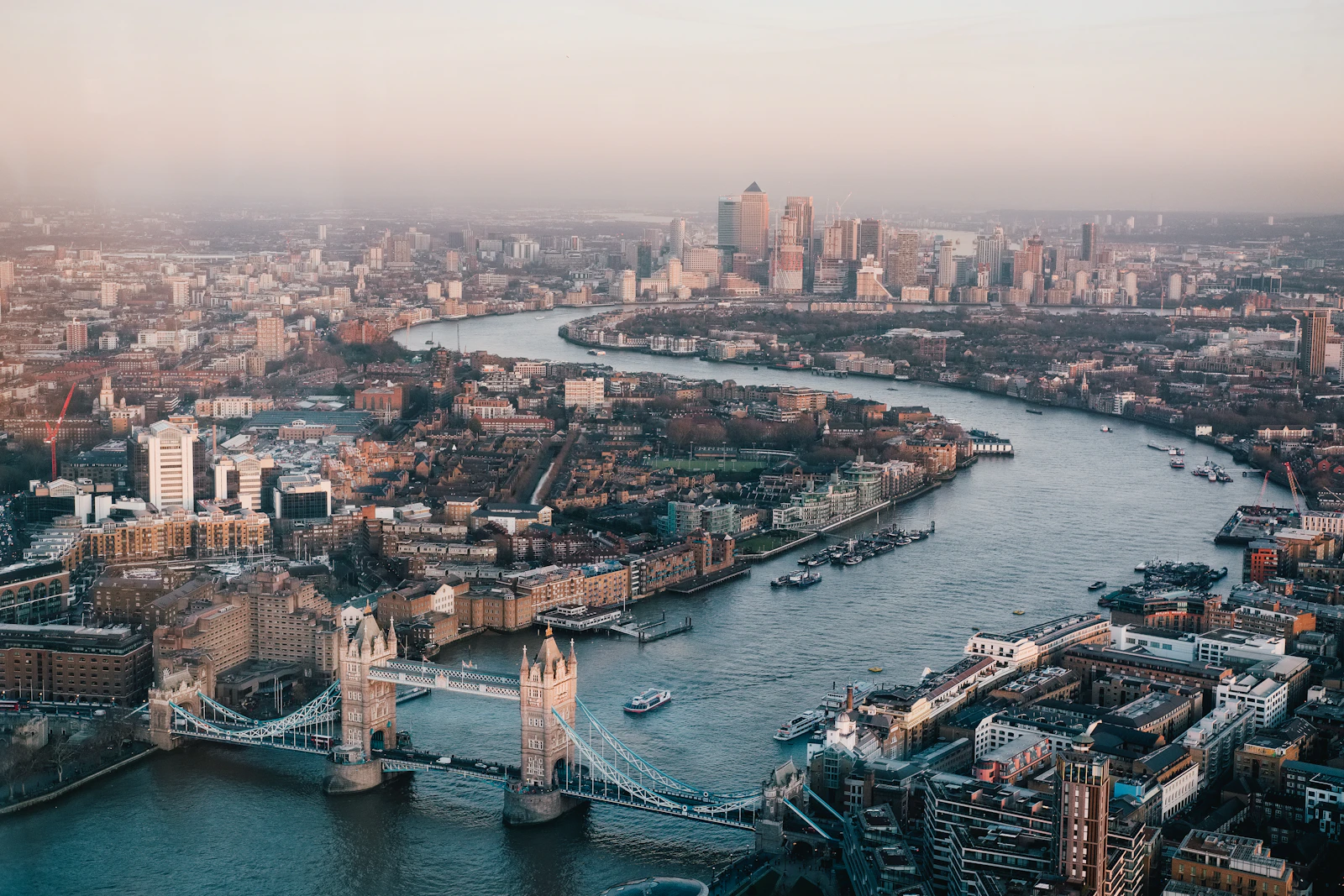
Here is what changed. For most of the last decade, a London traveller could leave a hotel in Mayfair at a sensible hour and reach Heathrow in plenty of time. The Tube ran. The Heathrow Express ran. The Piccadilly Line was a known quantity. Black cabs were everywhere. Uber was reliable. The system worked because all of its parts worked together.
In 2026 the parts have stopped working together. The Underground has confirmed strike action across eight days in May and June alone, with further disputes in the queue. The mainline rail network has been hit by repeated walkouts across Southern, Thameslink, and Great Western. Heathrow ground handlers have run two slowdowns since February. The protest calendar is the heaviest since 2019. The June royal events overlap with the start of Wimbledon. Notting Hill Carnival, Pride, the London Marathon, the Lord Mayor's Show, and the New Year fireworks all create their own days of road closure on top of everything else.
None of this is a reason to avoid London. It is a reason to plan differently. The travellers who arrive on time during a disrupted week are not the lucky ones. They are the ones who have read the calendar, picked the right route, left at the right hour, and booked the right vehicle. This handbook is how they do it.
The twenty playbooks below break down the entire London transfer landscape into operational decisions. They cover the geography of the city's road network, the specific quirks of each airport, the routes that actually work during a Tube strike, the timing windows for cruise ports, the buffer mathematics for business meetings, and the field-tested protocols our drivers use on the worst days of the year. You can read it front to back as a course, or jump to a specific playbook when a specific situation hits.
One note before we start. Most travel guides treat ground transport as the boring part of the journey. We treat it as the part where everything is decided. The flight either lands or it does not — that is mostly out of your hands. The forty-five minutes between the gate and the meeting are entirely in your hands. Get those minutes right and everything else falls into place. Get them wrong and the rest of the trip is recovery. This is a handbook for getting those minutes right.
London Ground
Before any of the strategy or scenario playbooks make sense, you have to understand the physical and operational landscape of London transfers. Part One is the foundation: the calendar of known 2026 disruption, the geography of the road network, the six airports and what makes each one different, the cruise ports and rail hubs that sit just outside the city, and the specific London pinch points where transfer plans most often fail.
The 2026 London Disruption Calendar
Every confirmed and probable disruption event in London for the year ahead, mapped to its operational impact on airport, Eurostar, and ground transfers.
The single most useful document in 2026 London travel is a calendar. Not a generic one — a calendar that overlays the confirmed industrial action dates, the major political demonstrations, the royal and state events with road-closure footprints, the sporting and cultural fixtures that draw a million-plus visitors, and the weather and seasonal patterns that affect specific routes. Building this calendar is the first task; checking it against your own trip is the second.
Confirmed and probable industrial action through Q3 2026
The Tube strikes of 19–22 May 2026 are now confirmed by Transport for London, with two 24-hour walkout periods: Tuesday 19 May at midday through Wednesday 20 May at 11:59, and Thursday 21 May at midday through Friday 22 May at 11:59. A second cycle is scheduled for 16–19 June 2026 in the same pattern. The dispute, led by the RMT union, concerns a proposed compressed four-day working week for drivers; mediation by ACAS has not yet produced a settlement, and further dates beyond June are considered probable rather than confirmed.
Mainline rail has its own pattern. The current Southern Rail and Thameslink dispute, also RMT-led, has produced cancellations and reduced-service days across Q1 2026 and is expected to continue. South Western Railway, which serves Waterloo and most of southwest London, has held stable since a March settlement but is monitored. Great Western Railway, which serves Paddington and the Heathrow Express corridor, has not been disrupted in 2026 but has historically been one of the more volatile networks.
At airport level, the Stansted ABM passenger-assistance walkout of 17–19 April 2026 was suspended after ACAS-brokered talks but the underlying dispute remains live. Heathrow ground handlers have held two slowdowns this year (March and April) without full strike action; the negotiation is ongoing. London City and Luton have so far avoided major industrial action.
The political and protest calendar
London's protest calendar in 2026 has been the most active since 2019. Standing demonstration patterns include weekly central London marches on the Israel-Palestine question (typically Saturdays, with March routes regularly closing parts of Whitehall, Trafalgar Square, and Park Lane), monthly climate-related demonstrations focused on government departments in Whitehall and the City, periodic agricultural protests in Parliament Square, and recurring trade union mobilisations on national strike days. The US Embassy in Nine Elms also draws scheduled gatherings.
For transfer planning, the operationally relevant question is not "is there a protest" but "what roads will be closed and for how long." The Metropolitan Police publish authorised march routes 24-72 hours in advance, and these are the practical planning document.
Royal, state, and major events
The 2026 royal and state calendar includes Trooping the Colour on Saturday 13 June (full closure of The Mall, parts of Whitehall, and the area around Horse Guards Parade from early morning through early afternoon), State Opening of Parliament dates with their own restricted corridors, the State Visit cycle which closes routes between Heathrow and central London at unpredictable intervals, and the Lord Mayor's Show on Saturday 14 November.
Major sporting and cultural fixtures with serious road-closure impact include the London Marathon (Sunday 26 April — already past for 2026 but recurring annually), Wimbledon (29 June through 12 July, with severe road impact around SW19 throughout), Notting Hill Carnival (Sunday 30 and Monday 31 August, total road closure across W10 and W11), and the New Year fireworks on the Embankment with closures from mid-afternoon on 31 December.
The seasonal overlay
Beyond the discrete events, London's transfer landscape has a strong seasonal rhythm. October through December is cruise-port heavy as the Mediterranean and Caribbean seasons start their UK-departure cycles from Southampton. January and February see lower traffic but heavier weather disruption with periodic snow and ice events that affect the M25 and M23. June and July are peak business-travel months overlapping with the start of the tourist surge. August is the lowest-volume business month but the heaviest leisure-tourist month. September brings the start of the autumn conference season and the highest concentration of corporate roadshow activity in London.
Our dispatch team maintains a rolling 90-day disruption calendar that is shared with corporate clients on request. It is updated daily and combines TfL, National Rail, Metropolitan Police, FCDO, and union announcement feeds. WhatsApp the dispatch desk if you want a copy mapped to a specific trip date.
London Transfer Geography 101
The M25 orbital, the radial A-roads, the postcode logic of central London, and why a transfer from W1 to TW6 is not what you think it is.
London is, from a transfer-operator perspective, a city built around a single orbital motorway and a small number of radial trunk routes. Almost every airport, port, and rail hub of consequence sits on one of these radials, and almost every transfer journey is some combination of central-London surface street work, radial trunk-road travel, and orbital M25 movement. Understanding the geometry is half of operational competence.
The orbital: M25
The M25 is the 117-mile motorway that encircles Greater London. It carries roughly 200,000 vehicle movements per day at its busiest sections, and on a typical weekday morning the southwest quadrant (between junctions 10 and 14) and the northwest quadrant (between junctions 16 and 23) are at or near capacity. Two specific sections matter for transfer work: the Heathrow approach (junctions 13-15) and the Gatwick approach (junctions 7-9). Both have predictable congestion patterns that compound during disruption events.
Critical operational insight: the M25 is not a circle of equal value. The eastern arc (Dartford Crossing, junctions 1-3) is the most fragile section because the Dartford tunnels and the QE2 Bridge are single points of failure. The Dartford crossings carry traffic from Kent to Essex and any closure creates 30-60 minute backups that propagate around the orbital. Our dispatch checks the Dartford status every morning before scheduling cross-river transfers.
The radials
From central London outward, the major radial routes that carry transfer traffic are: the A4 Great West Road and its motorway extension the M4 (the Heathrow corridor, carrying most western and southwestern airport traffic), the M23 (the Gatwick corridor), the M11 (the Stansted corridor), the M1 (the Luton corridor and the East Midlands), the A2 / M2 (the Dover and Channel ports), the A12 / M11 (the Tilbury and Stansted corridor), the A3 (the Portsmouth and south coast corridor), and the A40 / M40 (the Oxford and West Midlands corridor).
Each radial has its own personality. The M4 is heavily monitored and well managed; closures are rare but congestion is predictable. The M23 has fewer alternative routes and is therefore brittle. The M11 is reasonably resilient but the final approach to Stansted has a single chokepoint at the airport access road. The A2/M2 corridor to Dover is straightforward in normal conditions but vulnerable to truck-related incidents that close the road for hours.
The central London grid
Within Zone 1, London does not have a grid; it has a medieval pattern of streets overlaid with a series of Victorian and twentieth-century interventions. The operating reality for transfer drivers is that the city is divided into about a dozen functional districts that connect to each other through a small number of east-west and north-south arteries. The east-west arteries that matter are Oxford Street and its parallel Wigmore Street and Mortimer Street further north; Piccadilly and its parallel Pall Mall; the Embankment; and Bishopsgate up to Liverpool Street. The north-south arteries that matter are Park Lane, Regent Street, Charing Cross Road, Kingsway, and the City corridor through King William Street.
The two operational complications are: first, the Congestion Charge zone, which covers the central 21 square kilometres and adds £15 per vehicle entry between 7am and 6pm on weekdays plus 12pm-6pm on weekends and bank holidays. Second, the ULEZ (Ultra Low Emission Zone), which now covers all of Greater London inside the M25 boundary, charges £12.50 per day for non-compliant vehicles, and effectively forces all transfer operations to use Euro 6 diesel or equivalent vehicles. Both are factored into our pricing; passengers do not pay separately.
The postcode logic
London postcodes follow a compass-letter logic radiating from the central districts. W1 (West End), SW1 (Westminster), WC1 and WC2 (Bloomsbury and Covent Garden), EC1 through EC4 (the City), and parts of NW1, N1, and SE1 form the central transfer market. Within these, the actual transfer-time differences are larger than passengers expect. From W1 to Heathrow T5 in normal traffic is 50-65 minutes; from EC2 to Heathrow T5 in the same conditions is 65-80 minutes because the journey has to traverse the entire breadth of central London before joining the A4. From SW1 to Gatwick is 60-75 minutes via the A23/M23; from EC1 to Gatwick adds 15-20 minutes for the same reason.
The single most useful piece of information a passenger can give the dispatcher is the full pickup postcode. A "Mayfair hotel" can mean any of fifteen pickup points spread across a 600-metre radius, each with different access patterns. The postcode plus the building name or number resolves it cleanly.
The river
The Thames divides London transversely, and the bridges and tunnels that cross it are operationally critical. From east to west, the road crossings within central London are: the Dartford Crossing (M25), the Blackwall Tunnel (A102, frequent closures), Tower Bridge (frequent maintenance and event closures), London Bridge, Southwark Bridge, Blackfriars Bridge, Waterloo Bridge, Westminster Bridge, Lambeth Bridge, Vauxhall Bridge, Chelsea Bridge, Albert Bridge, Battersea Bridge, Wandsworth Bridge, Putney Bridge, and Hammersmith Bridge (currently closed to motor traffic). A closure of Tower Bridge or the Blackwall Tunnel during peak hour can add 30-45 minutes to a transfer that crosses the river at that point.
For Gatwick-bound transfers from north of the river, the choice of crossing is one of the most consequential routing decisions. Vauxhall Bridge is usually the cleanest; Waterloo Bridge is the default but exposed to event closures; Blackfriars is the alternative; Tower Bridge should be the last choice on any time-sensitive transfer.
The Six London Airport Profiles
Heathrow, Gatwick, Stansted, Luton, London City, and Southend — every airport's transfer profile, terminal logic, and disruption-day reality.
"The London airport" does not exist. London has six commercial airports, each with its own catchment, terminal layout, ground access pattern, and disruption profile. The right airport for a given trip is sometimes obvious and sometimes the single most underrated planning decision. This playbook breaks down all six.
London Heathrow (LHR)
By far the largest, handling about 80 million passengers per year across four operational terminals (Terminals 2, 3, 4, and 5). Located about 20 miles west of central London, accessed by road via the M4 and the M25 from junction 14 or junction 15. Heathrow Terminal 5 is the British Airways and Iberia hub. Terminal 2 is the Star Alliance hub including Lufthansa, United, Air Canada, Singapore Airlines, and Air New Zealand. Terminal 3 hosts oneworld members other than BA — American Airlines, Cathay Pacific, Qantas, Royal Jordanian — plus Virgin Atlantic. Terminal 4 hosts SkyTeam including Air France-KLM, Delta, Korean Air, Saudia, and Etihad.
By rail, Heathrow is served by the Heathrow Express from Paddington (15 minutes to T2/T3, 21 minutes to T5, every 15 minutes), the Elizabeth Line from Paddington/Liverpool Street/central London (longer journey time but more stops and lower fare), and the Piccadilly Line from across central London (45-60 minutes from Zone 1, the cheapest option, the most vulnerable to disruption).
By road from Zone 1, Heathrow T5 is 50-65 minutes in normal traffic, 70-90 minutes in peak, 90-120 minutes during Tube strikes, and can stretch to 150 minutes during a combination of strike-plus-incident-plus-weather. Build buffer accordingly.
London Gatwick (LGW)
The second London airport, handling about 45 million passengers per year across two terminals (North and South) connected by an automatic shuttle. Located about 30 miles south of central London, accessed by road via the A23 and M23 from junction 7 onto the airport approach. Gatwick is the home of easyJet, British Airways short-haul leisure operations, TUI, Norwegian, and Wizz Air, plus a handful of long-haul carriers including Virgin Atlantic transatlantic services and emirates flights.
By rail, Gatwick is served by the Gatwick Express from Victoria (30 minutes non-stop, every 15 minutes), Thameslink services (longer but cheaper, with more central London stations), and Southern Rail. All three are vulnerable to RMT industrial action; on strike days the rail option can disappear entirely.
By road from Zone 1, Gatwick is 60-90 minutes in normal traffic, 90-110 minutes in peak, and 110-150 minutes during heavy congestion. The M23 has fewer alternatives than the M4, so an incident on the M23 produces longer delays than an equivalent incident on the M4.
London Stansted (STN)
The third-largest London airport, handling about 30 million passengers per year. Dominated by Ryanair, with significant easyJet, Jet2, and Wizz Air operations, plus a handful of long-haul charter services. Located about 35 miles northeast of central London, accessed by road via the M11 from junction 8 onto the airport approach.
By rail, the Stansted Express from Liverpool Street takes 47 minutes and is the standard option. National Express coaches from Victoria run every 15-30 minutes and take 90-110 minutes. By road from Zone 1, Stansted is 70-90 minutes in normal traffic. The M11 is reasonably resilient but the final airport access road is a single chokepoint.
London Luton (LTN)
Located about 35 miles north of central London, accessed via the M1 from junction 10. Dominated by easyJet, Ryanair, Wizz Air, and TUI, with a strong leisure-charter profile. By rail, Luton Airport Parkway is served by Thameslink and East Midlands Railway, with a short shuttle bus or DART (the new automated rail link) to the terminal. By road from Zone 1, Luton is 60-80 minutes in normal traffic.
Luton's transfer profile is heavily affected by the rail strike calendar because the rail-plus-shuttle combination is the standard access method for most passengers. On rail strike days, road transfer becomes essentially the only option, and our peak-hour M1 routing volumes have doubled on those days through 2026.
London City (LCY)
The most central London airport, located in the Docklands about 6 miles east of the City. Single terminal, handling about 5 million passengers per year, with a route network biased heavily toward European business destinations: Amsterdam, Frankfurt, Zurich, Geneva, Paris, Milan, Dublin, Edinburgh, and a small but growing transatlantic operation including New York via the British Airways A318 service (now operated as a regular widebody product).
By rail, City Airport is served by the DLR (Docklands Light Railway) with a 22-minute journey from Bank or 30 minutes from Tower Hill. By road from Zone 1, City is 30-45 minutes in normal traffic — the shortest road transfer to any London airport. For business travellers based in the City of London or Canary Wharf, City Airport is the operationally dominant choice. The check-in process is notably faster than the larger airports, and the airport is small enough that a 20-minute terminal-side window is sufficient.
London Southend (SEN)
The smallest of the six, located about 40 miles east of central London. Served primarily by easyJet for European leisure routes plus a few charter operations. Rail access via Greater Anglia from Liverpool Street takes about 55 minutes. Road access from Zone 1 is 70-90 minutes via the A12/A127. Southend's transfer market is small but the airport itself is uncrowded and check-in is fast, making it an interesting alternative for routes it serves.
| Airport | Distance from Z1 | Road (normal) | Road (strike day) | Best rail option | Rail vulnerable? |
|---|---|---|---|---|---|
| Heathrow (LHR) | 20 mi | 50–65 min | 90–120 min | Heathrow Express | Partial |
| Gatwick (LGW) | 30 mi | 60–90 min | 110–150 min | Gatwick Express | High |
| Stansted (STN) | 35 mi | 70–90 min | 100–130 min | Stansted Express | Medium |
| Luton (LTN) | 35 mi | 60–80 min | 90–120 min | Thameslink + DART | High |
| City (LCY) | 6 mi | 30–45 min | 45–70 min | DLR | Low |
| Southend (SEN) | 40 mi | 70–90 min | 100–130 min | Greater Anglia | Medium |
Pre-booked airport transfers across all six London airports.
Fixed pricing, flight tracking, meet-and-greet at arrivals, and free 60-minute wait time for arriving flights. Same-day requests handled via WhatsApp at +44 7427 249103. Or book online with confirmation in under 10 minutes.
Eurostar, Cruise Ports & National Hubs
Beyond the six airports, London's transfer market includes a network of rail and port hubs that handle millions of passengers annually with their own distinct operational logic.
The London transfer landscape extends well beyond the airports. The Eurostar terminal at St Pancras handles ten million passengers a year; the Southampton cruise port and the Dover ferry port together handle another six million; Tilbury, Portsmouth, and Harwich each have specialist roles. For travellers whose journey is not by air, this is the relevant infrastructure.
St Pancras International (Eurostar)
St Pancras International, in the heart of King's Cross / Camden border, is the London terminus of the Eurostar service to Paris, Brussels, Lille, Amsterdam, Rotterdam, and the seasonal direct service to Marseille and the French Alps. The terminal handles around 11 million Eurostar passengers per year. Check-in opens 75 minutes before departure for Standard Premier and Business Premier, 90 minutes for security and immigration; the minimum recommended arrival time is 60 minutes before scheduled departure, which is substantially faster than airport boarding.
St Pancras road access is from Euston Road for short-stay drop-off and from Pancras Road for the longer-term parking and taxi rank. Road access from Zone 1 is 15-25 minutes from Mayfair, 10-15 minutes from the City, 5-10 minutes from Bloomsbury. The Eurostar terminal sits directly above the underground stations for King's Cross (Northern, Piccadilly, Victoria, Circle, Hammersmith & City, Metropolitan lines) and St Pancras (the same plus Thameslink mainline).
Eurostar's resilience to industrial action is mixed. UK-side rail union action affects the access stations but not Eurostar itself directly. French-side rail union action (SNCF) can affect onward Eurostar services and arrivals into Gare du Nord. The Channel Tunnel itself is operated by Eurotunnel and is exceptionally resilient.
Southampton Cruise Port
Southampton is the UK's largest cruise port, located about 80 miles southwest of London. It hosts the majority of UK-departing major cruise lines including P&O, Cunard, Princess, Royal Caribbean, MSC, and Celebrity, with smaller operations from Marella and Saga. Five terminals operate: City Cruise Terminal, Mayflower Cruise Terminal, Ocean Cruise Terminal, Queen Elizabeth II Cruise Terminal, and Horizon Cruise Terminal — each used by different cruise lines and sometimes assigned only days before sailing.
Road transfer from Zone 1 to Southampton is approximately 1 hour 45 minutes in normal traffic via the M3, with a 2-hour 15-minute estimate accounting for typical congestion. Cruise embarkation windows are usually 11am to 4pm, with peak arrival around 1pm; transfers from London therefore typically depart between 9am and 11am. The return embarkation day from a cruise sees disembarkation between 7am and 9am, with road transfers departing the port from 8am onward.
Dover Ferry Port
Dover handles cross-Channel ferry traffic to Calais, Dunkirk, and seasonally to Boulogne, plus a smaller cruise operation. Located approximately 75 miles southeast of London via the M20/A20. Road transfer time is typically 2 hours from Zone 1, with longer times during summer peak and on holiday changeover weekends.
The operational specifics for Dover are: arrival time should be 60-90 minutes before scheduled sailing for vehicle ferries and 45 minutes for foot passengers; the post-Brexit border check has added typically 10-30 minutes to clearance times though investment in additional French border kiosks has reduced this from the 2024 peak; and Operation Brock contingencies (truck queueing systems on the M20) can affect access during severe disruption.
Tilbury and Portsmouth
Tilbury, on the north bank of the Thames Estuary, hosts a smaller cruise operation primarily for Fred Olsen and Ambassador Cruises, plus seasonal river cruises. Road access from central London is 1 hour to 1 hour 15 minutes via the A13. Portsmouth, 75 miles southwest of London, hosts ferries to France (Caen, Cherbourg, Le Havre, St Malo), Spain (Bilbao, Santander), and the Channel Islands, plus a smaller cruise operation. Road transfer is approximately 1 hour 45 minutes.
The national rail hubs
For onward travel within the UK, the main London terminus stations are: Euston (West Coast Main Line for Birmingham, Manchester, Liverpool, Glasgow), King's Cross (East Coast Main Line for Edinburgh, Leeds, York, Newcastle), Paddington (Great Western for Bristol, Cardiff, Oxford, Reading, plus Heathrow Express), Liverpool Street (East Anglia for Cambridge, Norwich, Stansted Express), Victoria (South for Brighton, plus Gatwick Express), Waterloo (Southwest for Southampton, Portsmouth, Bournemouth), and St Pancras (Eurostar plus East Midlands and Thameslink). Each has its own catchment, its own peak hours, and its own resilience profile to industrial action.
For cruise transfers, give the dispatcher the cruise line and the sailing date as well as the destination — terminal assignments at Southampton sometimes shift in the 24-48 hours before embarkation, and the dispatcher will track the assigned terminal automatically. Our Southampton route briefing includes the terminal-by-terminal access points and the typical embarkation queue.
London's Hidden Transfer Pinch Points
The specific bridges, junctions, tunnels, and event corridors where transfer plans most often fail — and how local drivers route around them.
A small number of specific locations on the London transfer map account for a disproportionate share of failed transfer journeys. They are not the obvious places. The M25 backing up at junction 14 in rush hour is well known; the things that surprise passengers are smaller, more local, and more route-specific. This playbook covers the ones that cost our clients the most time.
Hammersmith Flyover and the M4 spur
The Hammersmith Flyover carries the A4 over Hammersmith Broadway, and is the single most consequential structure on the western corridor to Heathrow. When it has been closed for maintenance (the last extended closure ran for several months in 2012-13), Heathrow transfer times from central London increased by 20-30 minutes for nearly the entire year. The flyover is currently operational but is on a long-term watch list and remains a single point of failure on the M4 spur into Heathrow.
Vauxhall Cross gyratory
The complex gyratory junction at Vauxhall, where the A3, A202, and A203 meet and where Vauxhall Bridge feeds south London-bound traffic, is a frequent congestion point during the morning peak and during Embankment closures. Transfers from north of the river heading to Gatwick via the A3 route should treat Vauxhall as a planned 8-15 minute holding pattern in peak hours.
Park Lane during state events
Park Lane (the A4202) carries north-south traffic on the west side of central London and is the single most useful artery for west-side journeys. During state visits, the lane is regularly closed in whole or in part to provide secure corridors between Heathrow and the central London royal residences. These closures are typically published 48-72 hours in advance but are sometimes adjusted closer to the date. Our dispatchers monitor the police bulletin feed for these notifications.
Blackwall Tunnel
The Blackwall Tunnel on the A102 carries traffic under the Thames between Greenwich and the Isle of Dogs. It is a critical link for transfers between east London and southeast London, including City Airport approach traffic from south of the river. The tunnel closes regularly for maintenance, has frequent incident-related closures, and is the most operationally fragile river crossing in the eastern half of central London. The Silvertown Tunnel, which opened in 2025 alongside it, has added redundancy but the Blackwall remains the principal route for many transfer journeys.
The Wimbledon corridor
During the Wimbledon tournament (29 June through 12 July in 2026), road transfers through SW19 — particularly along Church Road, Wimbledon Park Road, and the A219 — face extreme congestion. The All England Club car parks fill from 8am and the surrounding streets are subject to event-day parking restrictions. Transfers from central London to Heathrow that would normally route through south London are diverted around the Wimbledon area; this adds 15-25 minutes during the tournament period.
Notting Hill Carnival routes
The Notting Hill Carnival on the last weekend in August closes a large area of W10 and W11 for two full days. The closure zone includes Ladbroke Grove, Westbourne Park Road, Portobello Road, and adjacent streets, and traffic restrictions extend well beyond the procession route. Heathrow transfers that would normally use the Westway (A40) are not directly affected, but anything routing through Notting Hill, Bayswater, or Holland Park during the carnival weekend should expect significant diversions.
Hyde Park Corner during demonstrations
Hyde Park Corner, where Park Lane, Knightsbridge, Piccadilly, Grosvenor Place, and Constitution Hill all converge, is one of the most heavily impacted junctions during central London demonstrations. The Hyde Park assembly point is a common starting point for marches, and the routes typically pass through or alongside Hyde Park Corner. On large demonstration days, this junction can be closed in whole or in part for several hours.
The Heathrow Spur and Terminal access ramps
The final approach to Heathrow Terminal 5 involves a series of ramps and underpasses that have predictable choke points. Specifically, the access road serving the T5 short-stay car park and the kerbside drop-off area frequently backs up during peak departure windows (5am-7am and 4pm-6pm). The fix is to drop passengers at the slightly less congested arrivals level or to use the dedicated chauffeur drop-off, both of which save 5-10 minutes.
The Embankment closures
The Victoria Embankment (A3211) along the north bank of the Thames from Westminster to Blackfriars is a critical east-west artery. It is closed for the London Marathon, several charity runs, the New Year fireworks, the Lord Mayor's Show, and a handful of state ceremonies. Each closure cascades north-south river-crossing traffic onto fewer bridges.
The most common reason a passenger misses a flight on a transfer is not a strike. It is a one-off event closure of a road that was not on the original routing plan. Our dispatch desk runs a closure-monitor 48 hours before every transfer and a final check 4 hours before pickup; this is the unglamorous work that keeps the on-time rate above 98%.
Strategy
Part Two moves from the landscape to the decisions. The five strategic playbooks below answer the questions every transfer book has to answer before the day of travel: how far ahead do I book, which vehicle do I choose, which route do I take, how much buffer do I add, and how do I think about the cost-versus-risk trade-off when each option has a different shape.
The Booking Window Strategy
When to book a London transfer — the lead times that maximise availability, minimise cost, and protect against last-minute scarcity.
Booking too early is uncommon. Booking too late is the single most common operational mistake passengers make, and it gets dramatically more expensive during disruption. This playbook covers when to book for each scenario, with the actual lead times our dispatch desk recommends.
Standard airport transfers
For an airport transfer on a normal weekday with no confirmed disruption in the calendar, our recommended booking window is 48 to 72 hours in advance. This window allows the dispatcher to assign a specific driver, communicate the pickup address in advance, monitor the inbound flight if applicable, and rebalance the fleet to ensure the right vehicle class is in the right place. Bookings made within 24 hours are accepted but availability tightens; bookings made within 4 hours are operationally tighter still and may incur a short-notice fee depending on time of day.
Disruption-window transfers
For a transfer scheduled during a confirmed Tube strike, rail strike, major event, or other foreseeable disruption, the recommended window doubles: 5 to 7 days in advance is the operational sweet spot. The reason is fleet availability. On Tube strike days our utilisation runs at 95%-plus from 06:00 to midnight; bookings made within 48 hours of the strike face a real risk of unavailability at the specific time required. The current Tube strike windows — 19-22 May and 16-19 June — are good examples; on each, advance bookings began arriving 10 days out and the calendar was effectively full within 72 hours of the strike start.
Cruise and event transfers
Cruise port transfers should be booked at the time of cruise booking. Major event transfers (Wimbledon, Notting Hill Carnival, Pride, royal events) should be booked at least 14 days in advance, ideally 21-30 days for peak windows. The Wimbledon finals weekend, the Notting Hill Carnival Monday, and the New Year's Eve evening are the three highest-demand transfer windows in the London calendar; bookings made within 7 days are accepted only as availability permits.
Corporate roadshows and multi-stop bookings
For corporate engagements involving multiple stops, multiple vehicles, or full-day vehicle hire, the recommended lead time is 7 to 10 days. The complexity is not in the vehicle itself but in the choreography: drop one principal at one location, pick up at another, hold for 90 minutes at a third, transfer to the airport. These bookings benefit from a pre-engagement briefing call with the dispatcher and a documented route plan.
Same-day and emergency bookings
Same-day bookings are accepted via WhatsApp at any hour. Confirmation typically arrives within 10 minutes during business hours and within 30 minutes overnight. For confirmed bookings within the next 2 hours, the WhatsApp channel is faster than the online form; for confirmed bookings 4-24 hours ahead, either channel works well. Our dispatcher will tell you immediately if the requested window has limited availability and offer the next earliest or latest time that has confirmed capacity.
48–72 hours ahead. Online form is fine.
5–7 days ahead. WhatsApp dispatch for fastest confirmation.
Book at cruise-booking time. Specify cruise line and date.
14–30 days. Wimbledon finals, NHC, NYE are critical.
7–10 days. Include a briefing call with dispatch.
WhatsApp. Confirmation in 10 minutes.
Vehicle Class & Capacity Selection
Saloon, executive, MPV, SUV, eight-seater, coach — the right vehicle is rarely the cheapest, but is almost always cheaper than the wrong one.
The fleet decision is the most underrated part of transfer planning. A passenger who books a standard saloon for a four-person family with full holiday luggage discovers at the kerbside that the luggage will not fit, the booking has to be upgraded on the spot, and the cost is materially higher than if the right vehicle had been booked from the start. This playbook covers the operational logic of vehicle selection.
The Standard Saloon
The default vehicle for one to three passengers with airline-standard luggage (one large checked bag plus one piece of hand luggage per passenger). Typical models are the Mercedes E-Class, Audi A6, BMW 5 Series, or equivalent. Suitable for the substantial majority of business travel, day-trip transfers, and one-or-two-person leisure travel. Not suitable for: four-plus passengers (boot capacity is the constraint, not seat count), oversize luggage (golf bags, ski gear, musical instruments), or any scenario where headroom and comfort over a multi-hour journey is the dominant factor.
The Executive Saloon
A step up from the standard saloon, with a larger interior, more premium finish, and capabilities like rear-cabin work surface, charging points, and water service. Typical models are the Mercedes S-Class, BMW 7 Series, or Audi A8. The right choice for senior executive travel, multi-hour journeys (London to a regional city), or trips where the in-vehicle time matters (the executive needs to take a call, review documents, or rest).
The MPV (Multi-Purpose Vehicle)
Typically a Mercedes V-Class or equivalent, seating up to seven passengers plus luggage or four-to-five passengers with full luggage capacity. The MPV is the workhorse of family transfers, group transfers, and any scenario where luggage volume exceeds saloon boot capacity. For a family of four with holiday luggage, the MPV is almost always cheaper than a saloon plus surplus charges, and the journey is materially more comfortable.
The Luxury SUV
Range Rover, BMW X7, Mercedes GLS, or equivalent. Seats four-to-five passengers with substantial luggage capacity, with the additional capability of higher ground clearance for inclement weather and a more premium passenger experience. The right choice for VIP transfers, weather-uncertain journeys, and any scenario where the vehicle itself is part of the brief.
The Eight-Seater and Larger
For groups of seven or more, the next vehicle class is the eight-seater Mercedes Vito or Ford Tourneo, and beyond that, the sixteen-seater minibus and full-size coach. Most multi-passenger transfers in this range are handled by a single eight-seater; only group sizes above twelve typically require a minibus. For larger corporate group movements, two MPVs travelling in convoy often work better than a single coach because they offer flexibility on drop-offs and avoid certain access restrictions on minibus parking.
The capacity calculation that passengers get wrong
The most common booking error is calculating seat count without calculating luggage capacity. A four-passenger booking on a saloon technically fits four passengers but rarely fits four large checked bags plus four pieces of hand luggage; the practical capacity is closer to three with full luggage. Our booking form asks for both passenger count and luggage detail, and the dispatcher will recommend an upgrade if the combination exceeds the requested vehicle's capacity. The recommendation is always cheaper than the on-day upgrade.
Specialist requirements
Specialist requirements that affect vehicle selection include: child seats (we stock infant carriers, toddler seats, and booster seats — request at booking, no charge), wheelchair accessibility (a wheelchair-accessible MPV is available, requires 24-hour notice), golf bag transport (the boot capacity issue means an MPV is needed for two-plus golf bags), ski gear (similar to golf), pet transport (case-by-case, vehicle is professionally cleaned post-transfer), and musical instruments (a cello or full-size double bass requires an MPV; smaller instruments fit a saloon comfortably).
| Vehicle class | Pax | Large bags | Best for | Avoid for |
|---|---|---|---|---|
| Standard saloon | 1–3 | 2–3 | Business, single transfer | Family of 4 with luggage |
| Executive saloon | 1–3 | 2–3 | Senior exec, long journey | Pure economy briefs |
| MPV (V-Class) | 1–7 | 5–7 | Family, group, full luggage | Sub-budget transfers |
| Luxury SUV | 1–5 | 4–5 | VIP, weather risk, brand | Standard business transfer |
| Eight-seater | 5–8 | 7–8 | Larger groups, sports gear | Premium business briefs |
| Minibus/coach | 12+ | 12+ | Corporate groups, conferences | Small flexible groups |
The Routing Strategy
Which roads to take, when to take them, and why the GPS-suggested route is sometimes the wrong one.
Every transfer journey has a default route — the one that Google Maps or Waze suggests when you enter the addresses. The default is often correct. It is not always correct. London's road network has enough complexity, predictable congestion patterns, and event closures that the optimal route varies by hour of day, day of week, and current event calendar. This playbook covers how professional dispatchers decide.
The default routings, and why they are defaults
From Zone 1 to Heathrow, the default route is the A4/M4 — straight out west, joining the M4 at Hounslow, exiting at junction 4 for the airport. It is the default because it is the shortest distance, has the highest road quality, and has the best signage. From Zone 1 to Gatwick, the default is the A23 south through Brixton, joining the M23 at Hooley, exiting at junction 9 for the airport. From Zone 1 to Stansted, the default is the A10 north then the M11, exiting at junction 8. From Zone 1 to Luton, the default is the A1/M1, exiting at junction 10.
When the default fails
The default route fails most often during three scenarios: (1) incidents on the trunk road that close lanes or the road entirely, (2) event closures that affect the central London approach, (3) congestion patterns specific to time-of-day that the GPS cannot fully predict. For each, there is a known alternative.
For Heathrow, when the M4 is compromised, the alternative is the A40 / Western Avenue route, which adds approximately 10-15 minutes in normal traffic but can be substantially faster during M4 incidents. The route runs from the A40 at Acton or Hanger Lane, around the North Circular if necessary, and onto the M25 from junction 16, joining the M4 spur into Heathrow from the M25 side. For passengers based in north London or the City, the A40 route is sometimes the default rather than the alternative.
For Gatwick, when the M23 is compromised, the alternative is the A24 through Mitcham and Sutton, eventually joining the M23 from the south at Crawley. This route is slower in normal traffic but more resilient. Another alternative is the A21 / M20 / M23, which works only for passengers in southeast London and adds a more substantial detour.
For Stansted, when the M11 is compromised, the alternative is the A10 through Edmonton and Cheshunt, eventually joining the M11 at junction 7 or proceeding via A-roads to the airport. The A10 route is materially slower but has more redundancy.
The hour-of-day routing logic
Even on a clear day, the optimal route can shift by hour. The morning peak (7am-10am) has its worst congestion on the inbound legs of the M4, M23, M25 (southwest quadrant), and M1. The evening peak (4pm-7pm) has its worst congestion on the outbound legs of the same. For a 6am Heathrow departure transfer, the M4 is clear; for a 9am Heathrow departure transfer, the M4 might be very slow and the A40 alternative might win.
For Gatwick, the evening peak is particularly punishing on the M23 southbound between 4pm and 7pm. A 7pm Gatwick departure transfer should leave central London by 4:45pm at the latest, ideally earlier. Our dispatcher will recommend leaving even earlier if the flight is critical.
The state-of-the-network checks
Before any time-sensitive transfer, the dispatcher checks the following: TfL road network status (specifically for cordon and demonstration closures), Highways England live traffic for the M25 and the relevant motorway, Met Police road closure notifications, and the airport-specific congestion advisory if one exists. This check happens at four hours, one hour, and at pickup time.
Passengers sometimes assume that the driver is making the routing decision alone. In our operation, routing decisions are a dispatcher-plus-driver collaboration: the dispatcher monitors the network state, the driver applies on-the-ground judgement. A passenger who notices their driver taking an unexpected route is usually witnessing a real-time reroute around something the GPS has not yet caught up with.
Buffer Time Mathematics
How much extra time to add for each scenario — not a guess, but a calculation based on actual disruption probabilities.
The single most important number in transfer planning is the buffer — the time between expected arrival at the airport and the latest acceptable arrival for the flight. Get it wrong and you miss the flight. Get it right and you arrive a comfortable margin early. The right buffer is not a single number; it is a function of disruption probability, journey length, and the cost of missing the flight. This playbook walks through how to compute it.
The baseline arrival times
The flight-side baseline is fixed by the airline and the airport. For Heathrow short-haul, the recommended airport arrival is 2 hours before departure. For Heathrow long-haul, 3 hours before departure. For Gatwick and Stansted short-haul, 2 hours. For Gatwick long-haul, 3 hours. For Luton and Southend short-haul, 2 hours. For London City, 60-90 minutes is sufficient because the airport is small and check-in is fast.
Eurostar at St Pancras has its own logic: 60 minutes before departure for Standard, 45 minutes for Standard Premier with online check-in. Cruise embarkation has assigned arrival windows that vary by cruise line.
The transfer-side calculation
To the flight-side baseline, add the expected transfer time, then add the appropriate buffer for the day's specific risk profile. The transfer time is the GPS estimate plus a typical 15-20% margin for normal traffic variation. The buffer is what changes by scenario.
For a normal weekday with no disruption flagged, the recommended buffer is 30 minutes for transfers under one hour, 45 minutes for transfers one-to-two hours. For a transfer on a confirmed Tube strike day, double the buffer: 60 minutes minimum for short transfers, 90 minutes for longer. For a transfer on a major-event day (Wimbledon weekend, NHC, NYE), add 60-90 minutes regardless of base transfer length. For a transfer in confirmed adverse weather (heavy rain, snow, ice), add 45-60 minutes. For a transfer through a confirmed protest corridor, add 60 minutes plus the route diversion estimate.
Worked example: Heathrow long-haul on a Tube strike day
Departure flight: Heathrow T5 to Singapore at 21:30. Pickup location: Marylebone hotel (NW1). Date: Thursday 21 May 2026 (Tube strike confirmed).
Flight-side baseline arrival: 21:30 minus 3 hours = 18:30 at T5.
Transfer time: from NW1 to LHR T5 by road, normal traffic estimate 45-55 minutes; strike-day adjusted 65-90 minutes.
Strike-day buffer: 60 minutes on top of transfer time.
Total pickup time: 18:30 minus 90 minutes (high transfer estimate) minus 60 minutes (buffer) = 16:00 pickup.
Most passengers, asked to estimate, would pick up at 17:00 or 17:30 for an 18:30 airport arrival. On a strike day, that is the wrong answer — there is no buffer for an incident, no buffer for an unexpected closure, no buffer for the driver to find an alternative if the main route fails. The correct pickup time is 16:00, and the cost of the extra 90 minutes at the airport is approximately zero (T5 has lounges, food, and shopping; a missed flight has rebooking fees, accommodation costs, and meeting impact).
Worked example: Gatwick early-morning departure on a normal day
Departure flight: Gatwick North to Faro at 06:30. Pickup location: Holborn hotel (WC1). Date: a normal Tuesday in October.
Flight-side baseline arrival: 06:30 minus 2 hours = 04:30 at LGW North.
Transfer time: WC1 to LGW by road at 03:30-04:00, normal traffic, 60-70 minutes.
Buffer for normal day, short-haul: 30 minutes.
Total pickup time: 04:30 minus 70 minutes minus 30 minutes = 03:30 pickup.
This is the rare scenario where the buffer math is generous in absolute terms (you arrive 30 minutes before the recommended airport time) but appropriate given the cost of any failure: a missed 06:30 flight on a leisure route may not have an easy rebook on the same day.
The buffer that passengers most often shave is the wrong one. Cutting 15 minutes off the airport-side buffer (arriving 1h 45m before a long-haul instead of 2h) is sometimes acceptable for an experienced traveller with hand luggage only. Cutting 15 minutes off the transfer-side buffer (booking pickup 15 minutes later) is rarely a good trade because it offers no protection against road incidents.
Cost vs. Risk Trade-offs
When the cheapest transfer is the right choice, and when it is the most expensive one you will ever make.
Transfer cost is the most visible variable; transfer risk is the least visible. The right trade-off depends entirely on what is on the other end of the journey. This playbook covers the decision framework.
The cost-of-failure principle
The most useful frame for transfer cost is to compare it not against alternative transfer options but against the cost of failure. A missed flight to a leisure destination costs the price of the next available seat plus an overnight hotel — often £400-£800. A missed flight to a business meeting can cost the value of the meeting — sometimes a six-figure deal, sometimes nothing if the meeting can be rescheduled. A missed cruise departure can cost the entire cruise fare because most cruise lines have non-refundable boarding policies if you miss the embarkation window.
Against those costs, the difference between a £55 Uber and a £95 pre-booked chauffeur is small. Against the cost of nothing — a leisure traveller with flexible plans and no time pressure — the same difference is large. The right transfer choice maps to the cost-of-failure profile, not to the absolute transfer price.
The three cost-of-failure tiers
Tier 1: Failure is recoverable at low cost. The flight can be rebooked at no charge, the meeting can be rescheduled, the destination is flexible. For this tier, cost optimisation is the primary criterion. A coach to Stansted at £15 may be the right answer. A shared-shuttle transfer at £25 may be the right answer.
Tier 2: Failure is recoverable at substantial cost. The flight rebook fee is £150-£500, the meeting rescheduling is awkward but possible, the hotel is non-refundable for one night. For this tier, reliability is the dominant criterion and cost optimisation is secondary. A pre-booked chauffeur or a metered black cab is the right answer; a coach is too brittle.
Tier 3: Failure is catastrophic. The flight is the last of the day, the meeting is the only opportunity, the cruise sails without you, the wedding is in 24 hours. For this tier, reliability is the only criterion. A pre-booked chauffeur with explicit instructions, two layers of buffer, and a live operations check is the right answer. The cost is irrelevant relative to the consequence.
The hidden cost: time
The other hidden cost in transfer decisions is the value of the passenger's time. For a leisure traveller, an extra hour in transit is a cost of about zero — perhaps a slightly more tired arrival. For a business traveller billing at £400 per hour, an extra hour in transit is a £400 cost. For a senior executive whose calendar is the constraint, an extra hour in transit can be the difference between making a meeting and not, which can be a much larger number.
The cheapest transfer option for a leisure traveller is often a different cheapest option for a business traveller, because the time component matters differently. A coach from Victoria to Heathrow takes 60 minutes by road plus a Victoria-side walk of 15 minutes plus a Heathrow-side walk of 10 minutes — call it 90 minutes of travel time. A pre-booked chauffeur from a Mayfair hotel takes 55 minutes door-to-door. The chauffeur saves 35 minutes. For a £400-per-hour traveller, that is worth £230 alone, on top of the comfort and predictability gain.
The disruption-day cost inversion
On disruption days, the cost ranking of transfer options changes. The Tube strike makes the Tube free in monetary terms (because it does not exist) but valueless in operational terms. The Uber surge multiplies the spot price by 2-3x. The pre-booked chauffeur, with a fixed price agreed in advance, becomes the most predictable cost. This is the structural reason why on strike days, the chauffeur option is often the cheapest as well as the most reliable — a counter-intuitive result for travellers anchored to normal-day pricing.
All-in fixed pricing, confirmed at booking, no surge.
Get London Transfer quotes are inclusive of all fees: meet-and-greet at arrivals, 60 minutes of free wait time for arriving flights, ULEZ and Congestion Charge fees, baby seats and child seats on request. No surge pricing on strike days, holidays, or events. Quote takes 2 minutes via WhatsApp or 10 seconds via the online form.
Disruption
Part Three is the scenario library. Each of the five playbooks below covers a specific disruption category — Tube strikes, mainline rail strikes, aviation disruption, protest activity, and weather — with the operational decisions, the routing alternatives, and the specific guidance our dispatchers give passengers caught in each. These are written for the day you need them.
The Tube Strike Playbook
19–22 May. 16–19 June. And whatever comes next. The complete operational guide for moving through London when the Underground stops.
The London Underground carries five million passenger journeys on a normal weekday. When it stops, those passengers do not disappear; they redistribute onto the bus network, the Overground, the Elizabeth Line, the DLR, the road network, cycling, and walking. The bus network absorbs perhaps two million; the road network absorbs much of the rest. This is why ground transport becomes the operational story of a Tube strike day.
What actually closes
"Tube strike" is shorthand for a strike of one or more grades of London Underground workers, organised by the RMT or sometimes by ASLEF. The exact pattern of closures depends on which grades strike and for how long. A drivers-only strike closes most lines completely. A station-staff strike closes stations and disrupts service but does not necessarily stop trains. A combined strike — drivers plus station staff plus signalling — closes the network entirely.
For the May 2026 dispute, the strike pattern is two 24-hour walkouts beginning at midday on Tuesday 19 May and Thursday 21 May. The Wednesday and Friday daytime services are also significantly affected because the early-morning service depends on the previous evening's depot routine. In practice, passengers should expect very limited Tube service from Tuesday lunchtime through Friday lunchtime, with isolated lines on Wednesday and Friday afternoons offering reduced service.
What still runs
The Elizabeth Line, operated separately from the Underground (TfL Rail's successor), often runs during Underground industrial action because its operating workforce is separately balloted. On the May 2026 strike, the Elizabeth Line is expected to run a reduced service. The DLR (Docklands Light Railway), the London Overground, and the Tram services from Croydon are not affected by Underground disputes; they typically run as normal. The Heathrow Express, operated by Great Western Railway and a separate workforce, runs as normal.
The bus network runs as normal but is heavily oversubscribed; expect to wait through one or two full buses before being able to board on key routes. Cycle hire (Santander Cycles) is available; many central London corridors have dedicated cycle lanes and the journey times during a Tube strike are sometimes faster by bike than by car. Walking is viable for journeys under three miles; central London core distances (Mayfair to King's Cross, Westminster to the City) are walkable in 45-60 minutes.
The road network during a Tube strike
The London road network during a Tube strike is operating at 110-130% of its normal volume. Average journey times across Zone 1 increase by 40-70%. The worst-affected corridors are: anything crossing Hyde Park (Knightsbridge, Park Lane, Bayswater), the Embankment, anything crossing the river within Zone 1, and the approaches to all six airports. Specific pinch points like Vauxhall Cross, Hyde Park Corner, Tottenham Court Road, and the Strand reach saturation by 8am and remain saturated until late evening.
For airport transfers during a Tube strike, the operationally important consequence is that road journey times for the central-London segment of any transfer increase substantially. A 50-minute Heathrow journey becomes 75-90 minutes; a 75-minute Gatwick journey becomes 105-130 minutes. This is on top of any additional volume on the trunk roads themselves.
The four-quadrant routing model
For Tube strike day transfers, we route based on a four-quadrant model of central London. From the northwest quadrant (NW1, NW8, W1 north of Oxford Street, W2), the M4/A4 route is direct and fastest. From the southwest quadrant (SW1, SW3, SW7, W1 south of Piccadilly), the M4/A4 is still optimal but the access via Park Lane or Sloane Street may be congested; an alternative via Earl's Court and the A4 is sometimes faster. From the City quadrant (EC1-EC4, E1 west), the route is via the Embankment to the A4 — the Embankment closure risk is the dominant variable. From the southeast quadrant (SE1, SE11), the A4 access requires crossing the river at Vauxhall or Battersea; both are checked.
The pre-strike booking surge
Our booking volume for Tube strike days runs at 3-4x normal levels for the relevant date. The booking surge starts 10-14 days before the strike, peaks 5-7 days before, and remains heavy through the strike days themselves. The operational implication for passengers is that bookings made within 48 hours of the strike face availability constraints, particularly for high-demand vehicle classes (executive saloons, MPVs) and high-demand time windows (early morning and late afternoon).
The countervailing factor is that during the strike itself, our dispatcher can sometimes reallocate fleet capacity to accommodate same-day urgent bookings. WhatsApp dispatch is the right channel for this — confirmation typically arrives within 10 minutes during peak hours.
The most consequential decision a passenger can make on a Tube strike morning is the time of pickup. A 15-minute earlier pickup is typically the difference between arrival on schedule and a missed flight. Our dispatch defaults to suggesting earlier-than-customer-requested pickup on strike days; passengers are free to overrule but the data overwhelmingly supports the dispatcher recommendation.
The Mainline Rail Strike Playbook
Southern, Thameslink, Great Western, South Western, and the rest — when the mainline strikes, the airport access landscape changes immediately.
Mainline rail strikes are distinct from Tube strikes in scope and impact. They affect specific operating companies rather than the network as a whole, and the impact on transfer planning depends entirely on which company is striking and which airports are affected. This playbook covers the operational logic.
The five operators that matter for London transfers
Five mainline operators serve London and matter for airport access. Southern Rail and Thameslink (operated together by Govia Thameslink Railway) serve Gatwick from Victoria, London Bridge, St Pancras, and intermediate stations. Great Western Railway operates the Heathrow Express from Paddington plus the Elizabeth Line connection. South Western Railway serves the southwest corridor including Southampton (relevant for cruise transfers). East Midlands Railway and Thameslink serve Luton Airport Parkway. Greater Anglia operates the Stansted Express from Liverpool Street.
A strike by GTR affects Gatwick severely and Luton partially. A strike by GWR affects Heathrow access via Paddington. A strike by SWR affects Southampton transfers. A strike by Greater Anglia affects Stansted. Each requires its own response.
The Gatwick rail strike scenario
This is the most common mainline rail strike pattern affecting airport transfers. When the Gatwick Express is suspended, the alternative rail options are Thameslink (if not also struck), Southern services (if not also struck), or no rail at all. The road alternatives become the only options.
On a Gatwick rail strike day, our booking volume to Gatwick triples. The principal effect is the same as a Tube strike but compressed into the Gatwick-bound subset: extra demand, tightening availability, and the importance of pre-booking. The road journey from Zone 1 to Gatwick during a rail strike is typically 10-20 minutes longer than a normal day because the M23 sees additional volume from passengers who would otherwise have used the train.
The Heathrow rail strike scenario
A strike by Great Western Railway affects the Heathrow Express. The Elizabeth Line, operated by MTR Elizabeth Line, runs on a different workforce and is typically unaffected, though periodic action by other unions has affected it. The Piccadilly Line is unaffected by GWR strikes.
Practical effect: Heathrow Express passengers should shift to the Elizabeth Line where possible. The journey from Paddington is longer but the cost is lower. Our Heathrow road-transfer volume on a GWR-only strike day is up by 25-40% — less dramatic than a Tube strike because more rail alternatives remain.
The Luton rail strike scenario
Luton is the most rail-dependent of the London airports — the rail-plus-shuttle / DART combination is the standard access for the majority of passengers. When Thameslink is on strike, road transfer becomes essentially the only practical option. Our Luton transfer volume on a Thameslink strike day can rise by 50-80%.
The operational specifics for Luton transfers on a rail strike day: pickup times should be earlier than equivalent normal-day pickups by 30-45 minutes, because the M1 carries additional volume. The default route via the M1 from Hendon is exposed to commuter traffic; an alternative via the A1 has more nodes but is sometimes faster.
The Stansted rail strike scenario
Greater Anglia strikes affect the Stansted Express specifically. The alternatives are National Express coaches from Victoria (every 15-30 minutes, journey 90-110 minutes) or road transfer (70-90 minutes plus disruption-day buffer). Our Stansted transfer volume rises 20-30% on Greater Anglia strike days, less than Gatwick or Luton because Stansted overall has lower transfer volume.
The cross-network domino effect
The most important pattern to understand is that mainline rail strikes are rarely fully isolated to one network. When Southern Rail strikes, Thameslink usually also strikes because the workforce is shared. When Greater Anglia strikes for one union grade, related grades may follow. The result is that "one airport disrupted" on the headline often means "two or three airports disrupted" in practice. Our dispatcher tracks the union-by-union balloting cycle precisely so we can pre-position fleet for the right airports.
The Aviation Disruption Playbook
When the flight is cancelled, the ground transfer is still in the calculation — sometimes more so than before.
Aviation disruption — cancellations, long delays, airport ground-handler strikes, ATC slowdowns — produces a specific operational pattern for ground transfer. The patterns differ depending on whether disruption is known in advance or arrives unexpectedly. This playbook covers both.
Pre-announced disruption: 24-72 hours notice
When a strike or operational decision is announced 24-72 hours before the flight, passengers face three options: accept the rebook offered by the airline, request a refund and find an alternative route, or hold the original booking and gamble that operations recover. The transfer dimension of each is different.
If accepting the rebook: the new departure time creates a new transfer requirement; our dispatcher can usually shift an existing booking to the new time at no additional charge. Notify WhatsApp dispatch with the new flight time as soon as the rebook is confirmed.
If finding an alternative route: this is the high-value scenario for ground transport. A direct chauffeur transfer to a different airport, to St Pancras for a Eurostar, or directly to the destination across the Channel via Le Shuttle, becomes the contingency. The savings from acting decisively can be substantial: a passenger whose Heathrow flight to Paris is cancelled but who pivots to Eurostar at St Pancras typically saves 6-12 hours over waiting for the next available flight.
If holding the original booking: the transfer plan should remain in place but with an early-morning check at the dispatcher's end to confirm operational status before pickup. This protects against the trip-to-the-airport-only-to-find-it-cancelled scenario.
Day-of cancellation: the four-hour window
When a flight is cancelled within four hours of scheduled departure, the operational picture is different. The passenger is either at the airport, on the way, or about to leave. Each requires a different response.
At the airport: stay at the airport for the airline's rebook process; the ground transfer is paused. Once the new flight time is confirmed, the dispatcher repositions a vehicle to return to the airport at the right time for return-trip-or-onward-transfer service. The 60-minute free wait time built into our airport bookings covers most of these scenarios.
On the way: the driver continues to the airport for the same reason; once at the airport the passenger has the airline rebook channel plus the dispatcher's flexibility on return.
About to leave: WhatsApp the dispatcher immediately. If the flight is cancelled and rebooked to a different day, the transfer can be cancelled or rescheduled without charge. If the cancellation suggests routing to a different airport for an alternative flight, the dispatcher can re-route the pickup in real time.
Airport ground-handler strikes
A specific subcategory of aviation disruption is the airport ground-handler strike, where baggage workers, fuelling crews, or other ground services strike rather than the airline workforce. The 2026 examples include the Stansted ABM walkout and the Heathrow ground-handler slowdowns. The effect at the airport is longer check-in and security queues, delayed bag drop, and risk of flight delays from upstream loading slow-downs.
The transfer implication: arrive earlier than the standard recommendation by 30-60 minutes if the strike affects your departure airport. Our dispatcher recommends this proactively when bookings are scheduled during confirmed handler-strike windows.
The airport-to-Eurostar pivot
One of the most useful operational moves during European aviation disruption is the pivot from an airport flight to a Eurostar service. The pivot makes sense when: the destination is Paris, Brussels, Lille, Amsterdam, or Rotterdam; the flight has been cancelled or delayed by more than four hours; and the Eurostar itself is running on the day. The pivot does not make sense when: the destination is further than Eurostar's reach; the same operational disruption is also affecting cross-Channel rail; or the rebooked flight is on a same-day acceptable schedule.
For passengers stranded at Heathrow with a cancelled Paris flight, our dispatcher can re-route the originally planned transfer from "Heathrow to Paris hotel via airport" to "Heathrow to St Pancras for Eurostar, then dispatch a Paris-side partner vehicle to meet the train." The arrangement is typically faster than waiting for the next available flight.
When flights cancel, our dispatch goes live.
If your booked transfer is affected by aviation disruption, message WhatsApp dispatch on +44 7427 249103 and we will rework the plan in real time — alternative airport routing, Eurostar pivot, ground-transfer to a different city. All bookings include free amendment up to 4 hours before pickup; disruption-affected bookings can be amended at any time.
The Protest & Demonstration Playbook
London's 2026 protest calendar is the heaviest since 2019. Here is how it affects transfers, and how to plan around it.
London's protest activity in 2026 is the most consistent we have seen across nine years of operation. Most protests do not affect airport transfers directly, but they affect surface transport in specific corridors, and on the worst days they affect everything. This playbook covers what to expect, where the closures fall, and how to route around them.
The standing weekly pattern
The most consistent feature of the 2026 London protest calendar is the weekly Saturday march in central London on the Israel-Palestine question. The marches have started, variously, from Hyde Park, Park Lane, Marble Arch, and Embankment, with routes typically including Park Lane, Piccadilly, Trafalgar Square, Whitehall, and Parliament Square. Closure footprints depend on march size and route, but the typical Saturday afternoon impact runs from approximately 12:00 to 17:00, affecting all major east-west and north-south arteries through the West End.
For airport transfers on Saturday afternoons, this matters substantially. A Heathrow transfer from a Mayfair hotel between 13:00 and 16:00 on a Saturday should expect either to start very early and clear the area before the march begins, or to route via Edgware Road / A40 to avoid the closures entirely. Our dispatcher monitors the Metropolitan Police march-route publication and reroutes Saturday bookings automatically.
Whitehall and government demonstrations
The corridor along Whitehall and around the Ministry of Defence, Parliament Square, and Downing Street is the most frequently used protest space in central London. Demonstrations targeting specific government departments tend to assemble in Whitehall or in Parliament Square and may close the entire corridor for several hours. For transfers from south of the river crossing Westminster Bridge or Lambeth Bridge, the routing impact can be substantial.
The City and financial district
Protests targeting financial institutions occasionally affect the City of London, particularly around Bank, the Royal Exchange, and the Bank of England. The City has a denser network of one-way streets and shorter blocks than the West End, which means closures tend to be more localised but with more cascading impact on neighbouring streets. Transfers from City of London hotels to Heathrow during a City protest day should expect 15-25 minutes of additional time.
The Embassy precincts
The major embassy precincts of London — the US Embassy in Nine Elms (Vauxhall), the Russian Embassy in Kensington Palace Gardens, the Israeli Embassy in High Street Kensington, the Chinese Embassy in Marylebone (and the planned move to Royal Mint Court near Tower Hill) — all draw scheduled and ad-hoc demonstrations. The Nine Elms area in particular has become a frequent demonstration site, with effects on the A3205 (Nine Elms Lane) and the A202 (South Lambeth Road). For transfers crossing south London through Vauxhall, this is monitored.
The agricultural and industrial mobilisations
2026 has seen periodic agricultural-sector protests in Parliament Square and along Whitehall, with tractor convoys driving in from the M25 ring. These have been smaller and more contained than equivalent European mobilisations but produce localised disruption on the entry routes — particularly the A40 west and the A1 north. The dispatcher tracks these announcements and reroutes inbound transfers accordingly.
What is monitored and how
Our dispatcher monitors five feeds for protest planning: the Metropolitan Police road closure bulletins (typically posted 24-72 hours in advance), the City of London Police equivalents, the TfL Streets unscheduled-disruption feed, the major protest organiser social media accounts (which often publish route maps), and a small selection of London-focused news accounts that aggregate the same. The combination gives us a clear picture of expected closures 24-48 hours in advance, which is sufficient for most transfer planning.
For Saturday afternoon transfers between Heathrow and the West End, we now default to recommending pickup or drop-off times either before 11:30 or after 17:30. The window in between is operationally tight on roughly 30 weekends out of 52 in 2026.
Weather & Force Majeure Playbook
Snow on the M25, flooding on the A4, wind closures at City Airport — the weather-driven disruption patterns that London transfer operations plan for every year.
London's weather is generally mild but generates specific operational complications at predictable times of year. The 2026 calendar already contains a winter that produced two significant snow events (in January and February) and an early-spring storm cycle that affected transfer operations in early March. The playbook below covers the patterns and the responses.
Snow and ice
Significant snow in London is uncommon — typically two or three short events per winter — but when it falls, the road network is poorly prepared compared to continental cities of similar latitude. The M25 has a salting and gritting programme that holds the trunk routes open during all but the most extreme events, but secondary roads, surface streets in central London, and the airport-side access roads can become slow or impassable.
The operational response during snow is: increase all transfer time estimates by 40-60%, deploy SUV vehicles for routes that include hill sections or rural approaches (particularly Heathrow's Bath Road approach and Gatwick's Crawley side), and check airport runway status before pickup. London airports have de-icing capability but heavy snow can produce extended ground delays; on the worst days, ground-transfer-to-the-airport is faster than rail because rail signalling becomes erratic in heavy snow.
Flooding
Flooding in London is highly localised. The vulnerable areas for transfer operations include the A4 around Hammersmith (which has flooded in 2023, 2024, and 2025 during heavy rainfall events), parts of the A2 in southeast London, the A406 North Circular at specific underpass points, and several sections of the M25 between junctions 16-19. The Thames Barrier protects central London from tidal flooding, but rainfall-driven surface flooding is a separate phenomenon and is becoming more frequent.
For flooding events, the dispatcher monitors the Environment Agency flood warning feed and reroutes around known-vulnerable sections. Transfers scheduled during heavy-rainfall warnings are flagged for early-pickup recommendation.
High winds and London City Airport
London City Airport is uniquely exposed to high-wind closures because of its short runway and the requirement for a steep approach. Wind speeds above approximately 35-40 knots from the wrong direction will close the airport, sometimes with as little as one hour of advance notice. For City Airport flights during forecast high-wind periods (typically October through March), our dispatcher tracks the airport's operational status and offers an alternative routing — usually to Stansted, which has the most schedule overlap with City's network — if a same-day closure becomes likely.
Fog
Persistent fog at Heathrow is one of the older operational risks and has not disappeared with modern instrumentation. Category III approach capability allows Heathrow to operate in very low visibility but reduces movement rate, producing departure delays of 30-90 minutes during prolonged fog episodes. For early-morning Heathrow flights during typical fog season (October through February), passengers should monitor the airport's status from 02:00 onward and consider a one-hour-earlier pickup if forecast indicates Cat III operations.
The summer thunderstorm pattern
Summer afternoon thunderstorms over the southeast of England produce a specific pattern of disruption: brief but intense rainfall, lightning-related ATC restrictions at Gatwick and Stansted, and surface flooding on the M25 western section. These events typically last 30-90 minutes and operations recover quickly, but their unpredictability makes them difficult to plan around. Our recommended response is to add 30 minutes to the standard buffer for transfers scheduled during the 14:00-18:00 window in July and August.
The reason we have a 98% on-time rate is not that we are faster than other operators. It is that we treat weather and event monitoring as part of the job. The fast driver is irrelevant if the road is closed.
Get London Transfer Dispatch Lead, internal briefing, 2026Travellers
Part Four moves from the general to the specific. Every traveller has a different brief, a different threshold for risk, a different definition of a successful transfer. The five playbooks below are for the five traveller profiles that account for the majority of our work: first-time London visitors, business travellers, families, senior or accessibility-need passengers, and major-event attendees. Each playbook is the operational shorthand we use internally when planning for that profile.
The First-Time Visitor Playbook
Landing in London for the first time — the operational decisions that determine whether the first impression of the city is competent or chaotic.
For a first-time London visitor, the transfer from the airport to the hotel is the first concrete experience of the city. It is also the moment of maximum vulnerability: a tired traveller, possibly jet-lagged, navigating an unfamiliar airport, an unfamiliar currency, and an unfamiliar transport system. The arrival hall at Heathrow Terminal 5 at 06:30 has produced more stress for arriving passengers than almost any other twenty minutes in their entire trip. This playbook is about removing that stress.
The pre-arrival decisions
The single most useful decision a first-time visitor can make is to pre-book a transfer. The differences between pre-booked transfer and ad-hoc options at the airport are: cost predictability (a confirmed quote rather than meter-based or surge-based pricing), language certainty (the driver knows the destination and has the address), wait-time absorption (the driver tracks the flight and adjusts), and exit speed (the driver is already at the correct meeting point when the passenger emerges from baggage reclaim).
The pre-arrival information needed is minimal: flight number, arrival airport and terminal, expected passenger count, large-luggage count, hotel name and full address. A child-seat or wheelchair-access request is added if applicable. The booking confirmation includes the driver's name and contact number, which is the principal reassurance for a first-time visitor.
The arrival hall experience
Heathrow arrivals: after baggage reclaim, passengers exit through customs into the public arrivals concourse. The chauffeur meeting point varies by terminal. At Terminal 5, the standard meet-point is just outside the customs exit, in the arrivals hall near the central pillar. At Terminal 2, the meet-point is at the designated chauffeur meeting point in the central area. At Terminal 3, similar. At Terminal 4, the meet-point is in the main arrivals hall. The driver carries a name board with the passenger's surname; the passenger simply looks for their name.
Gatwick arrivals: the meet-point is just outside the customs exit in the arrivals concourse, at the designated chauffeur meeting area. The driver carries a name board. Stansted, Luton, and London City all have similar designated chauffeur meeting points.
If the passenger does not see the driver immediately, the protocol is: stay near the customs exit, do not leave the arrivals area, message the driver's mobile number from the booking confirmation (calls work; if international roaming is not enabled, WhatsApp messages over airport Wi-Fi work). Our drivers respond within two minutes during a confirmed meet.
What to ask and what to expect
For a first-time visitor, the driver is also a London expert who is happy to answer questions during the journey. Common useful topics during the airport-to-hotel run include: where the nearest tube station to the hotel is, what the best dinner area is for the first evening, whether the hotel's restaurant is good or there are better options within walking distance, what the weather forecast is for the week, what the local etiquette is for tipping (10-12.5% in restaurants if not already included; the chauffeur tip is not expected but appreciated). Drivers in our fleet are briefed to answer these questions warmly and accurately; they have all been doing this for years.
The currency and connectivity question
UK currency is sterling. Contactless payment is universal in London and most travellers do not need to carry cash; foreign-bank debit and credit cards work universally on Tube, bus, and most retail. Black cab meters accept contactless. Our pre-booked transfers are pre-paid or paid at booking, so no cash handling is required at the airport.
Mobile connectivity: most international carriers' roaming works in the UK, but data costs can be high. Heathrow, Gatwick, and the other airports all offer free Wi-Fi with email/SMS sign-up. For visitors planning multi-day stays, a Giffgaff or Three eSIM bought before arrival costs £10-£20 and provides several gigabytes of data for the week.
The hotel arrival
The chauffeur drops at the hotel entrance, helps with luggage to the lobby, and confirms the passenger has been received by the hotel staff. The transfer is complete at that point. For the first-time visitor with a 14:00 check-in policy and a 09:00 arrival time, hotels will typically hold luggage in the secure-room facility until the room is ready, allowing the visitor to start exploring or have breakfast immediately.
For first-time visitors arriving early-morning, the most useful tip we give is: do not try to sleep on arrival. The fastest way to adjust to London time from anywhere in the world is to stay awake until 21:00 local on the first day. Spend the morning in a park (Hyde Park, Regent's Park, Green Park), have lunch outdoors if the weather allows, and resist the bed until evening. The chauffeur knows the best park entry points from any major hotel.
The Business Traveller Playbook
For business travel, the transfer is part of the meeting. The mathematics of buffer, the logic of vehicle class, and the operational protocols that keep the schedule intact.
For business travel, the criteria are different. The cost-sensitivity is lower; the time-sensitivity is higher. The number of moving parts is higher: multi-stop itineraries, calendar dependencies, late changes, and the meeting itself as a fixed point that everything else has to accommodate. This playbook covers the business-specific operational protocols.
The day-trip transfer
The London day-trip is the most common business transfer profile: arrive in the morning, attend meetings during the day, depart in the evening. The structure is two airport transfers separated by a full or partial day of vehicle hire or scheduled point-to-point transfers within London.
The operational specifics: morning arrival pickup with meet-and-greet at the airport, transfer to the first meeting or to the hotel for a brief base-camp before the meeting. Hourly vehicle hire during the day if the schedule is dense and unpredictable; scheduled point-to-point if the schedule is set. Evening transfer back to the airport with sufficient buffer for the specific route and time of day.
For a typical day-trip with a 06:30 LHR arrival and a 19:30 LHR departure, the total chauffeur engagement is approximately 13 hours. Hourly hire is normally more cost-efficient than three or four separate point-to-points if the meetings are within central London; point-to-point is more efficient if there is substantial dead time between meetings.
The multi-day visit
For a multi-day London business visit, the transfer requirement shifts toward scheduled point-to-points. The morning hotel-to-office transfer, the lunch venue transfer, the afternoon meeting transfer, the evening dinner transfer, the late-night hotel return — each is a separate booking. The advantage over hourly hire is cost; the disadvantage is the loss of in-vehicle continuity for documents, phone calls, and team conversations.
For senior executives, the hourly hire model is usually preferred regardless of cost, because the vehicle becomes a mobile working environment. A standard arrangement is a Mercedes V-Class with rear-cabin work surface, Wi-Fi, and water service, retained for the full London visit; the driver becomes part of the operational team for the duration.
The corporate roadshow
The corporate roadshow — typically 5-15 meetings across 1-3 days, often with overlapping teams and multiple vehicles — is the most complex transfer profile we handle. The operational specifics include: a dedicated dispatcher assigned to the roadshow with a single point of contact, a documented schedule with all addresses, meeting durations, and travel times confirmed in writing, multiple vehicles assigned for the duration with each driver briefed on the full schedule, and a real-time WhatsApp or phone channel for schedule changes.
Roadshow pricing is typically discussed in advance and structured as a daily rate plus mileage; the predictability of the rate is what allows the corporate sponsor to budget the engagement.
The late-change protocol
Business schedules change. Meetings run long, get cancelled, or get added at short notice. The protocol for our roadshow and business clients is: any schedule change communicated to dispatcher; dispatcher confirms vehicle availability and updates driver in real time; driver waits, repositions, or takes the new pickup at the new time. There is no charge for schedule changes within the booked engagement period; changes that require extending the engagement are charged at the agreed hourly rate.
The post-meeting recovery
A frequently overlooked dimension of business travel is the post-meeting transfer to the airport, particularly for high-stakes meetings where the post-meeting state of mind is mentally exhausted. The dispatcher schedules these with a 30-minute buffer at the meeting end (in case the meeting runs over), books the vehicle for direct route to the airport with no additional stops, and tracks the driver's progress for any in-route issues.
For overnight flights from Heathrow to North American destinations, the typical pickup is between 17:00 and 18:30, and the M4 westbound at that time is in evening peak. The recommended pickup is 30-45 minutes earlier than the GPS estimate would suggest. The cost of an extra hour at the airport lounge is negligible; the cost of missing a Tuesday-evening transatlantic flight is substantial.
The Family Travel Playbook
Two adults, two kids, four bags, three jet-lagged moods, and a 90-minute drive — the family transfer protocol that keeps everyone sane.
Family transfers have their own operational logic. The vehicle requirements are different; the timing patience is different; the on-board experience matters more than for any other category of transfer. This playbook covers what works and what does not.
The vehicle question
For a family of four with full holiday luggage, the right vehicle is almost always an MPV (Mercedes V-Class or equivalent). The reasons: luggage capacity (four large checked bags plus four pieces of hand luggage plus a stroller and/or car seat does not fit in a saloon), seat configuration (kids can spread out, parents can supervise from a forward seat, the rear bench accommodates child seats properly), and journey comfort (a 90-minute drive from Heathrow to a central hotel is materially more pleasant in an MPV than a saloon at any seat-count).
For a family of five or six, the choice becomes the larger MPV or an eight-seater. The eight-seater offers more space and is sometimes the better value, although the smaller MPV typically has a more premium interior.
Child seats
UK law requires children to use an appropriate child restraint until they are either 12 years old or 135cm tall, whichever is reached first. Get London Transfer carries infant carriers (for newborns to approximately 9 months), toddler seats (9 months to 4 years), and booster seats (4 to 12 years) at no additional charge. The seat requirement is specified at booking; the driver installs and adjusts the seat before pickup.
For families travelling with their own car seats, the seat can be carried in the vehicle and used in place of the operator-supplied seat. This is sometimes preferable for very young infants or for parents who want to maintain consistency across the trip.
The arrival airport experience
For families arriving at Heathrow, Gatwick, or Stansted, the airport arrival process is the same as for adult travellers but with longer baggage reclaim times (because there is more luggage) and slower exit through customs (because there are more passports to check). The chauffeur meet-and-greet protocol includes monitoring the flight, waiting at the designated meeting point with a name board, and helping with luggage from the meeting point to the vehicle.
The walk from the customs exit to the vehicle is usually 5-10 minutes at Heathrow (longer at Terminal 5 due to the underground link to the chauffeur car park); 3-5 minutes at Gatwick; similar at Stansted. The chauffeur carries luggage and manages the route; parents manage the children. Strollers can be carried in the vehicle or used during the walk and folded for the journey.
The journey itself
For a typical family transfer from Heathrow to a central London hotel, the journey takes 50-90 minutes depending on traffic. Children typically sleep through the latter half, particularly after a long-haul flight. Parents typically appreciate quiet, with the driver maintaining a calm and patient style. Toilet stops are accommodated if requested; the most useful intermediate stop on the M4 corridor is Heston Services, which is en-route and has clean, modern facilities. On the Gatwick corridor, Pease Pottage Services on the M23 serves the same function.
The hotel arrival
On hotel arrival, the chauffeur unloads luggage, escorts the family to the hotel reception, and confirms the family has been received. For families who have arrived early and need to wait for the room, the hotel will typically hold the luggage; the family is then free to explore. The driver can recommend nearby family-friendly options for breakfast or coffee depending on the hotel area.
The return transfer with sleeping children
The end-of-trip transfer back to the airport, particularly with young children who may need to be carried sleeping from the hotel to the vehicle, is one of the operational scenarios where the chauffeur's experience matters. The vehicle is brought close to the hotel entrance for minimal walking distance; the loading is done with adults inside the warmer hotel lobby until the last possible moment; children can sleep in the vehicle for the duration of the journey.
For families travelling with multiple children of different ages, the most useful logistical decision is which adult sits with which child. The chauffeur is happy to load luggage at the hotel and at the airport, allowing parents to manage children's seatbelts, snacks, and screens during boarding and unboarding.
The Senior & Accessibility Playbook
Wheelchair access, mobility assistance, oxygen requirements, and the operational specifics that make a transfer dignified for senior and reduced-mobility passengers.
Senior and reduced-mobility transfers require specific vehicle types, specific driver skills, and specific operational protocols. They also benefit from advance briefing to a higher degree than any other transfer type. This playbook covers the requirements.
Wheelchair-accessible vehicles
For passengers requiring wheelchair access, the vehicle is a specifically converted MPV with a rear-loading ramp and securing system for the chair. The conversion allows the passenger to remain in their own wheelchair throughout the journey, with the chair secured by four-point harness and the passenger's lap-and-shoulder belt as well. Accompanying passengers travel in the side seats.
Wheelchair-accessible bookings require 24-hour notice for a guaranteed vehicle, as the converted fleet is smaller than the standard fleet. Same-day requests are sometimes possible but cannot be guaranteed. The dispatcher confirms vehicle availability at booking and provides the specific vehicle's loading specifications for any chair-size questions.
Walking-assistance passengers
For passengers who walk independently but slowly or with a stick or walker, the standard saloon or MPV is suitable but with a few operational adjustments: pickup at the closest possible vehicle access point (e.g. at the hotel front rather than a side entrance), unhurried loading and unloading, driver assistance with luggage and walking aid storage, and door-opening service at both ends.
For airport arrivals, our drivers coordinate with airport assistance services where the passenger has booked airline mobility assistance. The handover point is the chauffeur meeting area in arrivals, where the airline assistant brings the passenger to the chauffeur and the chauffeur takes over from there.
Oxygen and medical equipment
For passengers travelling with portable oxygen concentrators or other medical equipment, the equipment is accommodated in the vehicle either at the passenger's feet or in the rear cabin space. Battery-powered concentrators do not require any special handling. The dispatcher should be informed at booking so the driver can ensure access to power outlets if charging is required during a long journey (the V-Class has multiple 12V outlets and USB-C ports).
Dementia and cognitive support
For senior passengers with dementia or other cognitive support needs, the operational protocol includes: calm driver demeanour, no unexpected route changes (if a familiar route exists, it is preferred), companion seating with the family member or carer beside the patient, music or radio adjusted to the patient's preference if known, and an unhurried pace. The dispatcher works with the family or care provider to brief the driver on any specific needs.
Hospital and care-facility transfers
Get London Transfer regularly handles transfers to and from London hospitals, particularly for international medical patients arriving at private hospitals (the major ones being the Wellington, the Cromwell, the Princess Grace, King Edward VII's, the Harley Street Clinic, the London Clinic, and Great Ormond Street for paediatric patients). These transfers are scheduled through the patient's care manager or family with the same booking protocol as any other transfer; the dispatcher confirms loading-bay access and any specific entrance requirements at the destination.
The reduced-pace protocol
For senior passengers travelling alone or with light support, the entire transfer is paced to the passenger's comfort. Loading takes longer; the route is driven at a less aggressive pace; rest stops are offered on longer journeys; communication is more measured. Our driver training includes specific guidance on this protocol and on respecting passenger autonomy throughout.
The Major Event Playbook
Wimbledon, Pride, Trooping the Colour, Notting Hill Carnival, Lord Mayor's Show, the Marathon, New Year's Eve. The transfer landscape on London's eight biggest event days.
London's major events compress transfer demand into specific dates and specific corridors. The operational story is different for each event, but the common thread is: high demand, severely restricted road access, and the importance of pre-booking. This playbook covers the eight events that account for the heaviest event-day operational load.
Wimbledon: 29 June – 12 July 2026
The Wimbledon Championships run for fourteen days in late June and early July. The All England Lawn Tennis Club is in SW19, accessed via the A219 (Wimbledon Park Road) or the A218. Transfers to the championship grounds — both for spectators and for players' families and corporate guests — are the heaviest single-venue demand of the London calendar.
The operational specifics: the Wimbledon parking restriction zone covers most of SW19 during championship days; transfers must use approved drop-off points; the closest drop-off to Centre Court is the Church Road entrance, but congestion at this point peaks 90 minutes before play starts (10:00 for show courts) and 60 minutes after play ends (around 21:30 on long days). Pre-booked private transfers should aim for arrival 75-90 minutes before play starts; later arrivals face significant delays.
Throughout the championship period, transfers across south London that would normally route via the A3 or the A24 should expect 15-25 minutes of additional time due to event-day congestion across the SW19/SW20 area.
Pride in London: 4 July 2026
The Pride in London parade typically marches a 1.4-mile route from Hyde Park Corner along Piccadilly, Regent Street, and Pall Mall to Whitehall. The 2026 event is scheduled for Saturday 4 July. Road closures begin in the morning around the parade route and extend through the afternoon into the evening party in the surrounding streets. Approximately one million attendees are expected.
For airport transfers on Pride day, the central London exit corridors heading west or south are severely affected. Transfers to Heathrow or Gatwick that need to depart Zone 1 between 11:00 and 18:00 should plan additional time of 45-60 minutes or, where possible, defer to evening departure when most road closures lift.
Trooping the Colour: Saturday 13 June 2026
The King's Birthday Parade takes place on Horse Guards Parade with full closure of The Mall, Horse Guards Road, and the surrounding area from early morning through early afternoon. The military parade brings tens of thousands of spectators to the Mall and adjacent areas. Road closures begin at approximately 06:00 and lift progressively through the afternoon.
For transfers from the West End or Mayfair to airports on this date, the recommended departure is either before 07:30 (to clear the area before the closure footprint expands) or after 15:00. The intervening hours produce the heaviest transfer-time inflation of any single event day, with normally-50-minute Heathrow transfers running to 80-100 minutes.
Notting Hill Carnival: Sunday 30 – Monday 31 August 2026
Europe's largest street festival closes a substantial area of west London for two consecutive days. The closure zone covers Ladbroke Grove, Westbourne Park Road, Portobello Road, All Saints Road, and surrounding streets. Approximately two million attendees over the two days. The closures begin Sunday morning and extend through Monday evening, with the Monday (Bank Holiday) being the larger of the two days.
For Heathrow transfers that would normally route via the Westway (A40), the routing is unaffected because the A40 corridor itself remains open. For transfers from W2, W8, or W11 hotels, however, the access to the A40 or any westbound route requires careful local routing to avoid the closure zone. Our dispatcher's NHC-week routing brief is updated daily during the carnival period.
Lord Mayor's Show: Saturday 14 November 2026
The Lord Mayor's Show is a centuries-old City of London procession from Mansion House along Cheapside, past St Paul's Cathedral, and along Fleet Street to the Royal Courts of Justice. Road closures cover the procession route and adjacent City streets from approximately 09:00 to 15:00. The fireworks display on the Thames in the evening adds Embankment closures from approximately 16:00 to 19:00.
For transfers between the City and Heathrow on Lord Mayor's Show day, the impact is principally on the morning departure window; afternoon transfers are largely clear. For City to Gatwick transfers, the additional time is approximately 15-25 minutes.
London Marathon: late April 2026
The London Marathon typically runs on the third or fourth Sunday in April. The 2026 marathon was held on 26 April. The course runs from Blackheath through south-east London, across Tower Bridge, through the City and Docklands, and finishes on The Mall. Road closures begin at approximately 06:00 and progressive sections lift through the afternoon. The marathon affects almost every south London transfer route and many central London routes.
For Heathrow transfers on Marathon Sunday, the recommended routing changes substantially: south London approaches are essentially unavailable until afternoon. North-side routing via the A40 or M40 corridor becomes the default.
New Year's Eve fireworks: 31 December
The London New Year fireworks on the Embankment draw approximately 100,000 ticketed spectators with substantially more unticketed crowds. Closures of the Embankment, Westminster Bridge, Waterloo Bridge, and surrounding streets begin in mid-afternoon and extend through midnight. The Tube runs all night for the occasion but is at capacity throughout.
For transfers on New Year's Eve, the operational reality is that almost any central-London-to-airport transfer is feasible if the timing is right (departures before 14:00 are largely clear; departures between 15:00 and 02:00 are very difficult). The 2026 NYE-night bookings are already filling the calendar in advance.
Book your event-day transfer ahead of the rush.
For Wimbledon, Pride, Trooping the Colour, Notting Hill Carnival, the Lord Mayor's Show, the Marathon, NYE, and other major event days, we pre-position our fleet weeks in advance. Booking early secures fixed pricing and guaranteed availability — the alternative on these days is no transfer at all. WhatsApp dispatch for advice on the right transfer pattern for your event.
Operations & FAQ
The Live Operations Dashboard
The following sources are the ones our dispatchers monitor daily. We share them here because the most valuable disruption planning often starts with reading the same feeds that the operators read.
Transport for London status. tfl.gov.uk publishes live status on every Tube line, the Elizabeth Line, the Overground, DLR, trams, buses, and road network. The "Status updates" page is the single most useful page on the site; subscribers can receive line-specific email alerts.
National Rail Enquiries. nationalrail.co.uk has live train running information, planned engineering work calendars, and strike-day timetables published in advance. For airport-bound passengers, the airport-specific pages (Heathrow, Gatwick, Stansted, Luton) include the live rail option status.
National Highways. nationalhighways.co.uk publishes live status of the M25 and the trunk motorways. The traffic camera feed is useful for getting a sense of congestion on a specific section before booking pickup time.
Met Office. metoffice.gov.uk has weather warnings and forecasts. The amber and red warnings are the operational triggers for buffer-time adjustments.
Metropolitan Police road closures. The Met publishes notified protest routes and road closure bulletins typically 24-72 hours in advance. The MPS Events Twitter account aggregates these for quick reading.
Airport-specific feeds. Each London airport publishes live status on its website and social media. Heathrow (heathrow.com), Gatwick (gatwickairport.com), Stansted (stanstedairport.com), Luton (london-luton.co.uk), London City (londoncityairport.com), and Southend (southendairport.com) each have their own pages.
Frequently asked questions
How early should I leave for Heathrow during a Tube strike?
On a Tube strike day, leave central London 60-90 minutes earlier than you would on a normal day. The Heathrow Express continues to run from Paddington and is the most reliable rail option. By road from Zone 1, allow 90-120 minutes minimum, ideally 150 minutes for terminals 4 and 5. Our dispatcher will confirm the recommended pickup time when the booking is made and adjust as the strike approaches.
What is the most reliable transfer option between London and Gatwick during a rail strike?
During Southern Rail and Gatwick Express disruption, pre-booked private transfer by road is the most reliable option. The journey from central London to Gatwick takes 60-90 minutes depending on traffic. National Express coaches from Victoria are a budget alternative running every 15 minutes and taking 90-100 minutes. Avoid relying on the rail option even if some Southern services appear in the timetable; cancellations during strike windows are common.
Can a London chauffeur take me directly to a cruise port like Southampton or Dover?
Yes. Direct London to Southampton transfers take approximately 1 hour 45 minutes in normal traffic, with most operators recommending a 2 hour 15 minute estimate. London to Dover takes approximately 2 hours; London to Tilbury approximately 1 hour. Get London Transfer offers fixed-price port transfers with cruise-line liaison; the dispatcher will track terminal assignments and confirm the specific drop-off point on the day of embarkation.
How do I book a London transfer in advance for a known strike day?
Book at least 5-7 days ahead for guaranteed availability on confirmed strike days; 7-10 days for major event days. Get London Transfer can be reached on WhatsApp at +44 7427 249103 or through the online booking system at getlondontransfer.com/booking.html. Confirmed bookings hold without payment until 24 hours before pickup, and amendments are free up to 4 hours before pickup.
What happens if my flight is delayed or cancelled?
For arriving flights, our drivers track the flight number and adjust pickup to the actual arrival time. The first 60 minutes of wait time after landing is included free; longer waits are charged at the standard hourly rate. For cancelled outbound flights, message WhatsApp dispatch as soon as the cancellation is confirmed; we will rebook the transfer to your new flight time at no charge, or cancel for a refund if the booking is more than 4 hours away.
Do you supply child seats?
Yes. We carry infant carriers (from newborn), toddler seats (9 months to 4 years), and booster seats (4 to 12 years) at no additional charge. Specify the seat requirement at booking and the driver installs and adjusts before pickup. For families travelling with their own car seats, we can carry and use those instead.
Can I get a wheelchair-accessible transfer?
Yes, with 24-hour advance notice. Our wheelchair-accessible MPV has a rear-loading ramp and a four-point securing system. Same-day requests are sometimes possible but cannot be guaranteed. The dispatcher confirms vehicle availability at booking and provides chair-size compatibility information for any specific requirements.
How is pricing calculated and what is included?
Pricing is fixed at booking and includes the journey, meet-and-greet at airports, 60 minutes of free wait time for arriving flights, the ULEZ and Congestion Charge for vehicles entering the relevant zones, and baby or child seats as requested. There is no surge pricing on strike days, holidays, or event days. Extra wait time beyond 60 minutes is charged at the standard hourly rate; additional stops or extended routes are quoted at the time of request.
What is the largest group size you can handle in a single vehicle?
Standard saloon: 1-3 passengers. Mercedes V-Class MPV: 1-7 passengers. Eight-seater Mercedes Vito or Ford Tourneo: 5-8 passengers. For groups of 12 or more, we operate minibuses; for very large groups, we coordinate multiple-vehicle convoys with a dedicated dispatcher. The dispatcher will recommend the right vehicle class based on passenger count and luggage volume.
Do you cover transfers outside London — to Oxford, Cambridge, or further afield?
Yes. We regularly handle long-distance transfers from London to other UK cities, including Oxford, Cambridge, Birmingham, Bristol, Bath, the Cotswolds, Manchester, and Edinburgh. These are typically booked as direct point-to-point transfers with fixed pricing. For Eurostar onward travel or Channel crossings, we coordinate with continental partner operators for end-to-end door-to-door service.
Glossary
ACAS. The Advisory, Conciliation and Arbitration Service, the UK body that mediates industrial disputes. ACAS involvement in a strike often precedes a settlement.
ASLEF. The Associated Society of Locomotive Engineers and Firemen, the train drivers' union.
Buffer time. The deliberate extra time added to a transfer plan above the minimum journey time, sized to absorb foreseeable disruption.
Cat III approach. A category of instrument landing system approach used during low visibility. Cat III operations reduce airport movement rate.
Congestion Charge. The £15-per-day fee for vehicles entering central London between 07:00 and 18:00 weekdays and 12:00-18:00 weekends.
DART. The Direct Air-Rail Transit at Luton Airport — an automated rail link connecting Luton Airport Parkway station to the airport terminal.
Dispatcher. The operations role responsible for assigning drivers to bookings, monitoring journeys in progress, and managing real-time disruption response.
DLR. The Docklands Light Railway, the automated rail network serving east London, including London City Airport.
Hourly hire. A pricing model in which a vehicle and chauffeur are retained for a block of time, with the customer dictating the schedule. Used for multi-stop business engagements.
Meet-and-greet. The airport arrival protocol in which the driver waits inside the terminal arrivals hall with a name board, helps with luggage, and walks the passenger to the vehicle.
MPV. Multi-Purpose Vehicle — typically a Mercedes V-Class or equivalent, seating up to seven passengers.
RMT. The National Union of Rail, Maritime and Transport Workers, the principal rail and Tube union in the UK.
ULEZ. The Ultra Low Emission Zone, covering Greater London inside the M25 boundary, with a £12.50 daily charge for non-compliant vehicles.
Zone 1. The central TfL travel zone, covering most of the West End, the City, and the immediate surrounding area. The most relevant zone for transfer origin and destination addresses.